Rob Poynton, Mark Earls and I recorded a podcast this morning, around the benefits of doing less planning. The podcast itself was largely unplanned but we managed to cover quite a few interesting topics.
Download the Podcast (27m45s, 9.8MB)
Here's my rough summary of what we talked about but hopefully you'll want to hear for yourself.
We begin talking about the workshop Mark, James and I ran with NESTA a couple of weeks ago and looking at what improv can teach us about control and influence. Mark refers to Simon Caulkin's recent piece in the Observer highlighting dual standards among CEOs when it comes to control - they seem to advocate light touch control of their companies by government but tight control by them of their internal processes.
We go on to explore how this paradoxical attitude to control goes on in each of us, and start looking at two different notions of power - one which is more about power over others, the other more about sensing our intimate connectedness to the world and operating from that sense.
Rob is based in Spain and explains that the Spanish have two different words for power use the same word for 'power' as for 'capability' that relates to this idea. We talk about how Improv can teach us the difference between controlling a narrative, say, and realising that we can have great influence over it. I get in my mantra of "notice more, change less" and how it influences how I manage my own anxieties, as well how I work with groups. Rob elaborates on the flow state of almost disappearing from groups he facilitates.
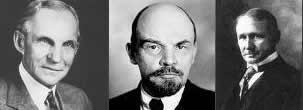
We look at the connections between Lenin, Henry Ford and Frederick Taylor - and how we want to move away from a brain-based, mechanistic notions of how the world works towards approaches that are, literally, more full-bodied. As Mark puts it, "the twentieth century dehumanised this amazing, collaborative, co-creative, brilliant species of ours into something which is a gross distortion, and we've lost a lot as a result." And Rob ends by talking about how we can, paradoxically, use the fruits of that divisive way of thinking to have a kind of connectedness we've never had before.


Email me


Facebook/Johnnie Moore
Linkedin/Johnnie Moore
Twitter/johnniemoore
Last.fm/johnniemoore
Del.icio.us/johnniemoore
Technorati/johnniemoore
MyBlogLog/JohnnieM
Blog/Johnnie Moore
Comments (4)
One point to clarify regarding the Spanish. It is not that there are two words, but that the same word, 'poder' can mean both 'power' and 'capability'. It has both meanings built in, suggesting there is more to power than simply ordering other people around.
February 16, 2009 15:16 Permalink for comment
I am pathetically impressed by your having an iTunes feed for me to subscribe to. Looking forward to the podcast - planning in facilitation is an interest of mine, as you know!
Cheers,
Stuart
February 16, 2009 23:16 Permalink for comment
Have now listened to the podcast, and am so glad you posted it up. It's the kind of rich conversation about facilitation practice that I have been wanting for some time. I particularly liked the contrast one of you drew between controlling something to get it right, and actively participating to get something good. The points about noticing and connecting also really resonated with me.
Is there a way of creating a space or opportunity for more conversations like this I wonder? Or are they already taking place somewhere?
Thanks again to the three of you.
Cheers,
Stuart
February 17, 2009 20:22 Permalink for comment
The paradox of control and freedom is indeed a vital one. Here is a mini extract from my book 'Sex, Leadership and Rock'n'Roll', which examines these issues through the metaphor of music, where both structure and improvisation must be welcomed.
www.academy-of-rock.co.uk
EXTRACT: The Chaos Disciplines
To respond to chaos, leaders must:
1. Gain control by letting go and developing more trust in the ability of the system or group of people to self-organise. This is where orchestra conductors throw away the sheet music, baton and where the jamming begins.
2. Use power elegantly – Elegance is a vital part of getting the results you really desire. This means using the minimum type, level and polarity of power necessary to achieve results and the means of getting there, rather than relying on submission or encouraging rebellion in order to reach your goals. Power type, level and polarity are defined as:
Types of power – You get power from your position or from your ability to control resources, human, financial and technical. These forms of power are mostly given to you. Power also come in forms that must be earned, such as: social (networking) power; expertise in a discipline; personal power or charisma and; the power that comes from having and using information.
Level refers to the degree of leverage necessary and whether power is used overtly or covertly.
Polarity refers to how power is used, i.e. positively or negatively. We looked at negative uses of power in the form of some of the political games people play under ‘Sex’.
All this adds up to a completely different and more socially responsible use of power. It also needs what Prince would call a new kind of ‘New Power Generation’ to cope with this responsibility. Are you ready for this?
3. Become more comfortable with paradoxes and try to synthesise apparent opposites using ‘and / also’, rather than trying to make ‘either / or’ judgements. For example: How to reward individuals and teams, How to retain customers by setting them free, etc.
4. Try to resolve complex problems rather than solve them. A tactical solution to a ‘swamp-like’ problem, which is inherently complex, ambiguous and has many different viewpoints, often makes the problem worse in the whole system. A good example of a swamp-like problem would be ‘fixing transport in London, Mumbai or Bangkok.’
5. Tolerate sub-cultures and conflict over ideas rather than insisting on a slavish adherence to a mission. Hire argumentative people.
6. Present ambiguous challenges rather than adhering to specific objectives and other convergent approaches to management.
7. Encourage staff to challenge organisational practices, myths and views from above, for example by the implementation of a well-thought out suggestions scheme.
8. Allow the business to face risky environments that put its talents in the area of innovation to the test to stay ahead of the game.
9. Develop people’s skills in what Peter Senge would call systems thinking, so they can recognise vicious and virtuous circles, see both the wood and the trees and devise elegant interventions at critical break points.
10. Value intuition at least as strongly as analytical thinking, possibly more so in cultures that are biased in favour of analysis over feel. Be cautious about the trap of relying solely on gut feeling though as we saw in the Cornflake Girl story earlier.
11. Replace forecasts with dress rehearsals for alternative future scenarios. (Dresses may be worn if required, but are not essential to success). At a grand level, dress rehearsals can be formalised as scenario planning. At a personal level this involves a great deal of mental what iffing.
February 21, 2009 15:45 Permalink for comment