A few days ago I blogged about insight being “the popcorn of therapy” and sparked some interesting comments.
Today, this jumped out from a post by Rob Paterson.
Ideas do not change us. Only experience changes us.
I don’t want to set up an either/or here, but I find this axiom attractive. The bookstores are full of “how to” books. Blogs (including this one, from time to time) are not short of advice on what to do. Somehow, it seems the advice is not being followed most of the time. I find most of those “how tos” demoralising to begin with, and then a bit irritating.
I wrote this a while ago (on a now redundant part of this site):
It’s fairly common in business to champion creativity. Yet an emphasis on coming up with new ideas risks putting the cart before the horse.
Sometimes the demand for new ideas can demoralise many people who don’t see themselves as creative, yet actually play a vital role in making things happen.
Consultants and ad agencies are often appointed because of a big idea – which then fails in the real world because it is pursued without paying attention to the problems of execution.
I’ve witnessed quite a few businesses doing brainstorming and other creativity sessions on awaydays/offsites. If they’re lucky, they have an exciting day… then they return to their offices, the adrenalin rush long past, and revert to their normal, much less inspired, ways of working together. Sure, they went somewhere and had a few ideas. But they haven’t really changed the way they relate to each other.
Whilst saying “relationships before ideas” is a bit trite, as well as being an idea itself, there’s something in it, I think.
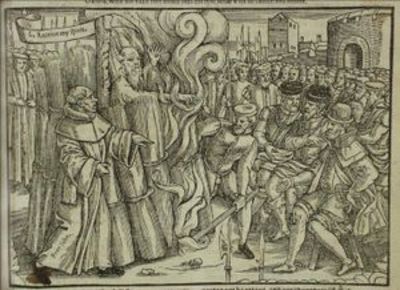
Rob puts it in more dramatic terms with this picture of Thomas Cranmer burning for his beliefs, sticking his sinful hand into the flames. Reminds of the Fritz Perls injunction to “lose your mind and come to your senses“.
Update: I’ve just read an interesting related story in the book Made to Stick. A school teacher creates an experiential lesson for her pupils, after the assassination of Martin Luther King. She divides them into the blue-eyed and the brown-eyed, and sets higher privileges for one group on the basis of them being smarter. The next day she says there was a mistake and switches the status of the two groups. On the third day, they get to discuss prejudice – with he benefit of a life-changing change of perspective.