
Rob has an interesting post at the FastForward blog looking at the science and numbers behind twitter. He puts up a couple of pictures from Valdis Krebs.
The pictures contrast two alternative views of organisations/networks/the world. The first, reflects what I think is the unconscious default view of many:
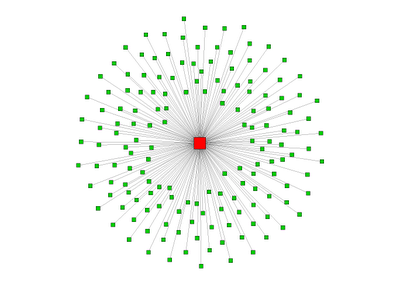
This reminds me of the stuff Viv and I have been talking about in relation to meetings. A huge amount of time in meetings appears to be spent with one person talking at length, and others listening. It reflects this hierarchical view of the world. Quite a lot of facilitators seem to revel in being the red dot in the middle of the room, orchestrating events, “capturing” things on flipcharts and organising festive displays of post-it notes.
And people often expect meetings to do things like “make decisions” as if the participants in the room (ie on the picture) have the power to do so…. rather than being connected to all sorts of other folks outside the room to whom they have to relate and who may or may not cohere to what this meeting “decides.”
I think the truth of most organisations, especially in our networked world, is more like Valdis’ second image:
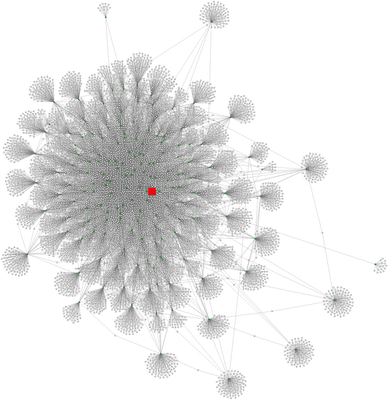
You may flatter yourself that you can be the red dot still, if you like, but the nodes you are trying to reach are organised in a beautifully complex way – and most of them are not in the room with you.
This is one of the reasons I’m cautious about “convergence” processes in meetings. I’m all for people in a room discovering consensus, but an attachment to this outcome leads to things like commitment ceremonies. I’ve been to too many of those.
If we focus too obsessively on “deliverables” we may not be paying sufficient attention to what Rob focusses on in the first part of his post: the grooming. Meetings, especially the fabled coffee breaks, allow for lots of informal connection which may be of more value than the official business.
Alongside the grooming, there are, of course, the many status displays and I think these tend to become more pronounced and awkward in more formal sessions. More on that in another post…



