
Rob put up a great post the other day making a whole load of challenging points about how see the world. I want to pick a couple of his images to make a slightly narrower point about meetings and how we play them.
Here´s exhibit A:
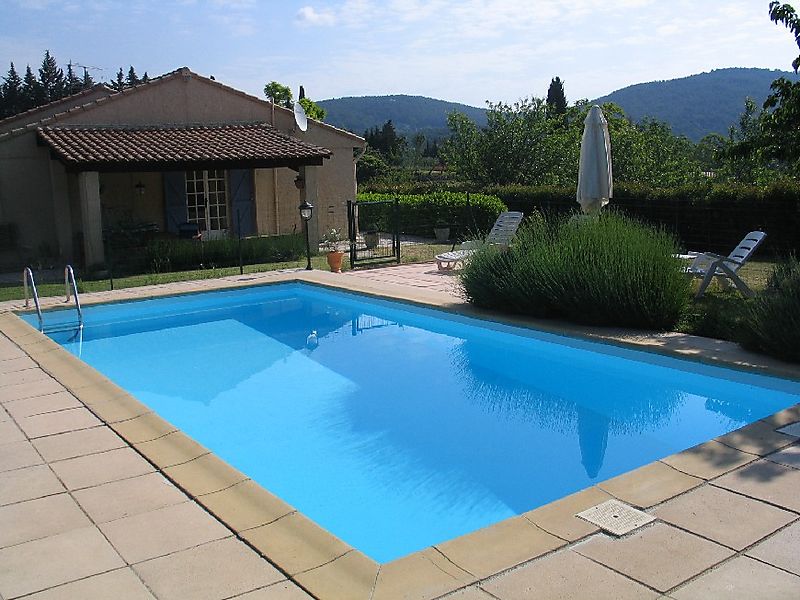
This is a conventional swimming pool and a particularly attractive one I´d say. It´s what we´ve been trained to think of as a nice safe place to swim… and in many ways it is if you don´t mind the chlorine. But for reasons elaborated by Rob in his post, this pool has a lot of downsides: it´s expensive, hard to sustain, uses lots of energy and chemicals, and if the maintenance fails even a little, it quite quickly becomes a pretty nasty place to be. it´s a very artificial space, sterile if you will.
Then there´s Exhibit B:
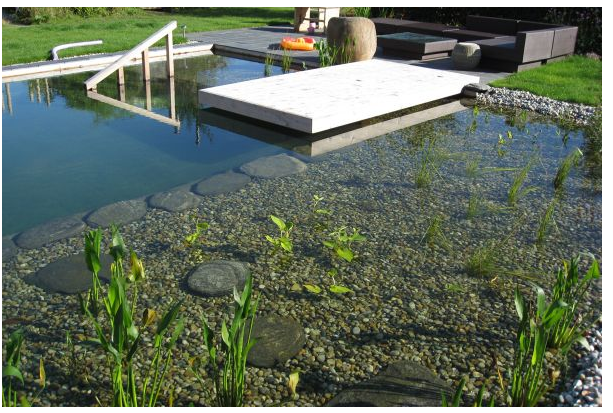
This is also a swimming pool, Jim, but not as most of us know it. No chlorine. As Rob puts it:
If designed to work with nature, Nature becomes your pool service. Not a chemical in sight! No scum on the way and if you have the right surrounding environment with the right birds and insects then no mossies either. As each year passes this pool gets easier to run and gets more attractive.
This one looks a bit messy in comparison, and if you´re not used to it you might feel less safe stepping into it. But it´s more sustainable.
So here´s my point: too many meetings are like the conventional pool – they´re safe but a bit smelly, comfortable in a way but at the price of being sterile. Where the pool has chlorine, maintenance men and ugly cleaning machines the conventional meeting has keynotes, powerpoint and often overbearing chairmen and, er, facilitators.
The second pool is more like open space and other conversational formats: intially intimidating and messy looking but more sustainable and, at least in a sense, natural.
I know which I´d rather jump into…
—–



